

I Loathe Lawnmowers
Ever since my first “job” mowing the lawn of a local CarMart, I have disliked lawnmowers and weed-eaters. Their noise and the way they rattled my bones when I had to use them was so dissonant. My distaste for the machines only grew once I came to understand how much of a toll their production, maintenance, and fuel takes on both the pocketbook and the environment. And of course all the time we have to spend wielding them — just to keep nature “under control.”

If you’ve been following along, you know BioHarmony is a SolarPunk project. We are seeking a better balance between nature and technology.
I wanted to steward our land in a way more aligned with nature. So I got some goats.
If you signed up for our OpenSource Everything series, and don’t want to read about our Domesteading experiments, please feel free to opt out of the “Domesteading” section but stay subscribed to the “OpenSource Everything” section. There is more on the way in that channel too! For the rest of you, welcome — and read on!
Goats Loathe Fences
It turns out, goats are quite the escape artists, and really don’t take well to fences. Especially the “portable” fences I tried to set up in various places around our property.
After a few seasons of frustration, trying different fences and locations, our poor goats have been confined to a very boring pasture with an electric fence. And even with that, they occasionally find a weak spot and get out.
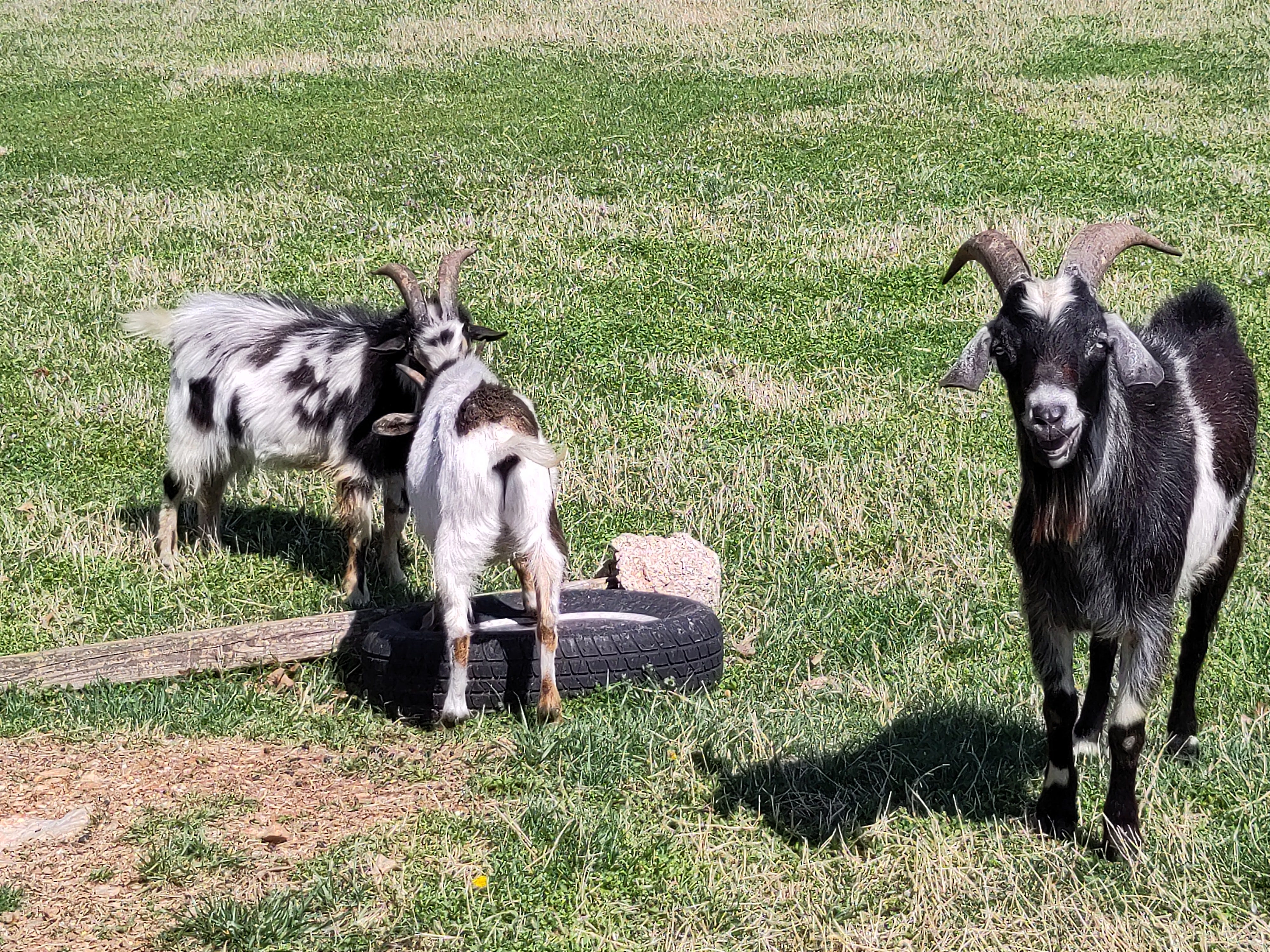
We are preparing a large garden for this year. And we really don’t want the goats getting into it and ruining our hard work. So I made one more attempt at figuring out how to manage these guys before I had to give up and sell them.
It looks like we have a winner!
NoFence Virtual Fencing
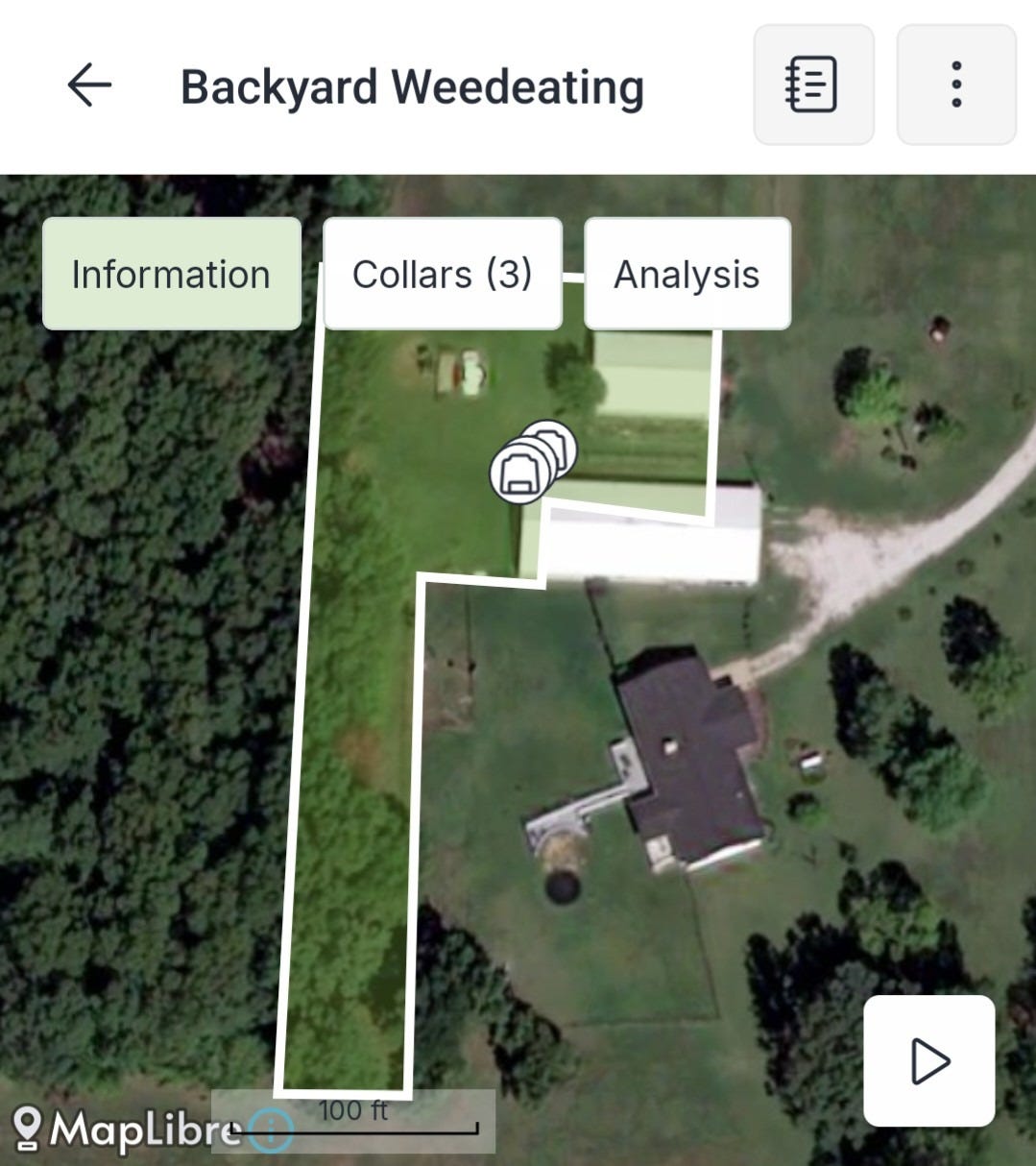
NoFence is an epic way to manage animals without physical fences. They have designed a system that allows you to create virtual fences from their app and move the animals from one “pasture” to another. It tracks their location, how many times they are warned about a boundary, how many times they are shocked, the collar’s battery status and cellular connectivity, and maybe more I haven’t found yet.
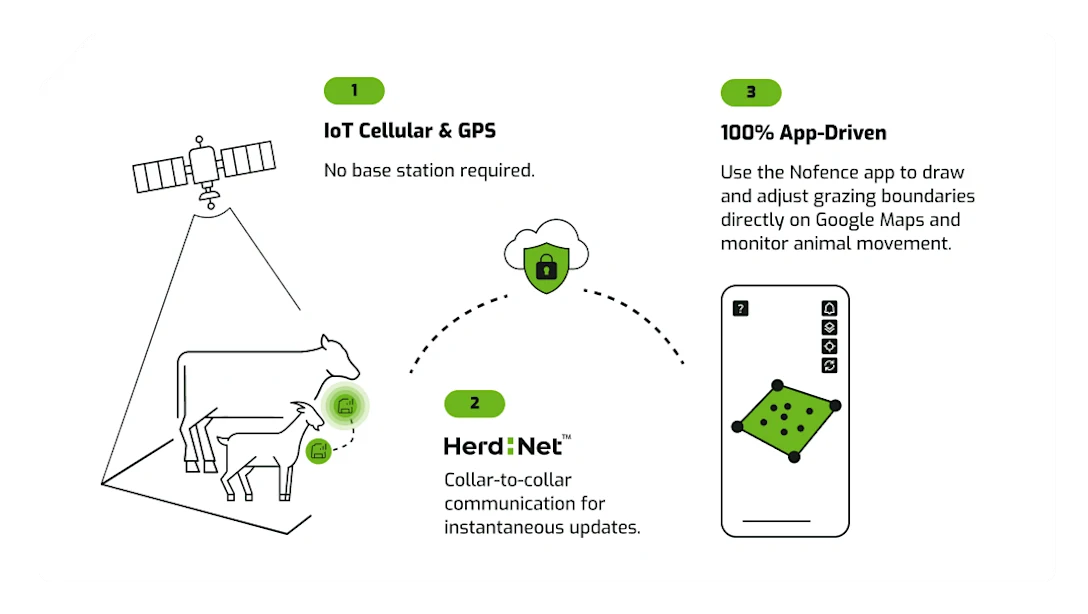
They even have this nifty feature that allows you to publish your pastures and animal data to the public, with a pre-designed poster and QR code that you can put up around your property for passersby or guests to learn more about virtual fencing. I would give you the link, but it only reveals our information if you are actually within 20km of our property (probably a smart security feature).
The collars have tiny solar panels on them to keep them charged up. After several days, we have not fallen below 90% charge on any of the collars. And I imagine the more they get to know their boundaries, the less they will drain the battery.
The app takes you and your animals through a training process. Our existing boring pasture was the perfect spot for training. It had a boundary that they already understood, with room to introduce the virtual boundary. The app suggested one to two weeks of training. But it seems our goats are quick learners, and it only took a few days for them to understand the tones and shocks before I could move them to fresh ground with lots of tasty forage.
If you happen to have cattle, sheep, or goats and would also like to try out this technology — let me know and I can get you a 5% referral discount for NoFence.
Shocking?!
Yes, I know it sounds scary, and perhaps even mean. But I have felt the shock from an electric fence myself, and these collars don’t have enough juice to do any serious damage. As seen in the video above, the collars emit a scaling sound pattern as they approach the boundary, giving the goats plenty of time to turn around now that they understand what the sound means. It only took a few interactions in the training pasture for them to know what to do. And now, they have access to a much healthier diet, logs to climb on, and space to explore. In the long run, this will bring more health and happiness than keeping them cooped up and breeding resentment with us when they escape and eat our garden.
Silvopasture Research
Now that we have the basics figured out, it opens up a huge range of possibilities on our property that I never could have attempted before with traditional fencing.
While simple “pastures” are pretty well tested at this point, I have not seen any information about how this tech fares in a forested environment. I want to know if virtual fencing is viable for applications in Silvopasture/Agro-forestry.
I attempted to put this up on experiment.com as a project that could be crowd-funded. It sounded like a cool platform for democratizing science. And it very well might be, but this project doesn’t quite fit their mold.

Silly memes aside, I understand their desire to keep their platform to more “pure” science experiments. This research is too open-ended with a lot of potential chaos and unknowns. Goats are a bit crazy, and our forest is very hilly and overgrown.
But I want to know how well this technology holds up to a forested environment. Will the collars wear faster, will they still get enough charge under the tree canopy, will the trees block their signal, will the goats still understand boundaries in a space with less clear visible boundaries?
Cost Analysis
The up-front investment for our minimal NoFence setup was similar to the price tag of a very nice riding lawnmower and weed-eater ($1,446). This included five collars (minimum order), a battery charger, and a longer collar chain for our bigger goat.
I know that my recurring inputs are now reduced — no gas or oil, and no need for supplemental goat feed during the green seasons. The collars seem to be getting plenty of sun to stay charged.
The hope is that maintenance costs will also be much lower than having to fix complicated machinery. I have two spare collars for now, and they seem pretty sturdy.
I will monitor and report back after a few seasons.
Domesteading Continues
If you would like to support our long-term research for experiments like this, our other Domesteading shenanigans, or our work with OpenSource software, I would very much appreciate your subscription here on the blog, or a contribution to our GoFundMe.


Things are about to really pick up at the Domestead. We are in the process of finding a 501-3c fiscal sponsor. We have at least one donor who would like to channel funds through a tax-free entity. The hope is to use those funds to facilitate workshops around the dome construction and eventually all sorts of permaculture/solarpunk topics. We aspire to become a “BioRegional Learning Center” for the western Ozarks. I will be putting together a separate update on that soon, so stay tuned!
If you know of a 501-3c fiscal sponsor that would resonate with our project, please let me know.
Gratitude
Many thanks to the paid subscribers who stuck it out during the last few months. The blog has been quiet, and your enduring faith in our project is encouraging. About half of you dropped off during that time, and I completely understand. In retrospect, an update about my priorities could have helped.
I was called to focus on “Faith, Family, and Finance” through the winter, and the blog didn’t really fit into any of those. I have increased my faith in God, self, and community. I have grown closer to and continued to heal my family. And while my finances still aren’t amazing, they are improving. Now Spring is here, and it is time to get building!
In service to God and all of Creation.
I read into these last year! It's a really cool technology. I'd love to see it tested in forest areas as well. I'll be moving to a very forested and open pasture land, and definitely want goats or sheep at some point. And I'm so with you on the lawnmower stuff! Great post.